
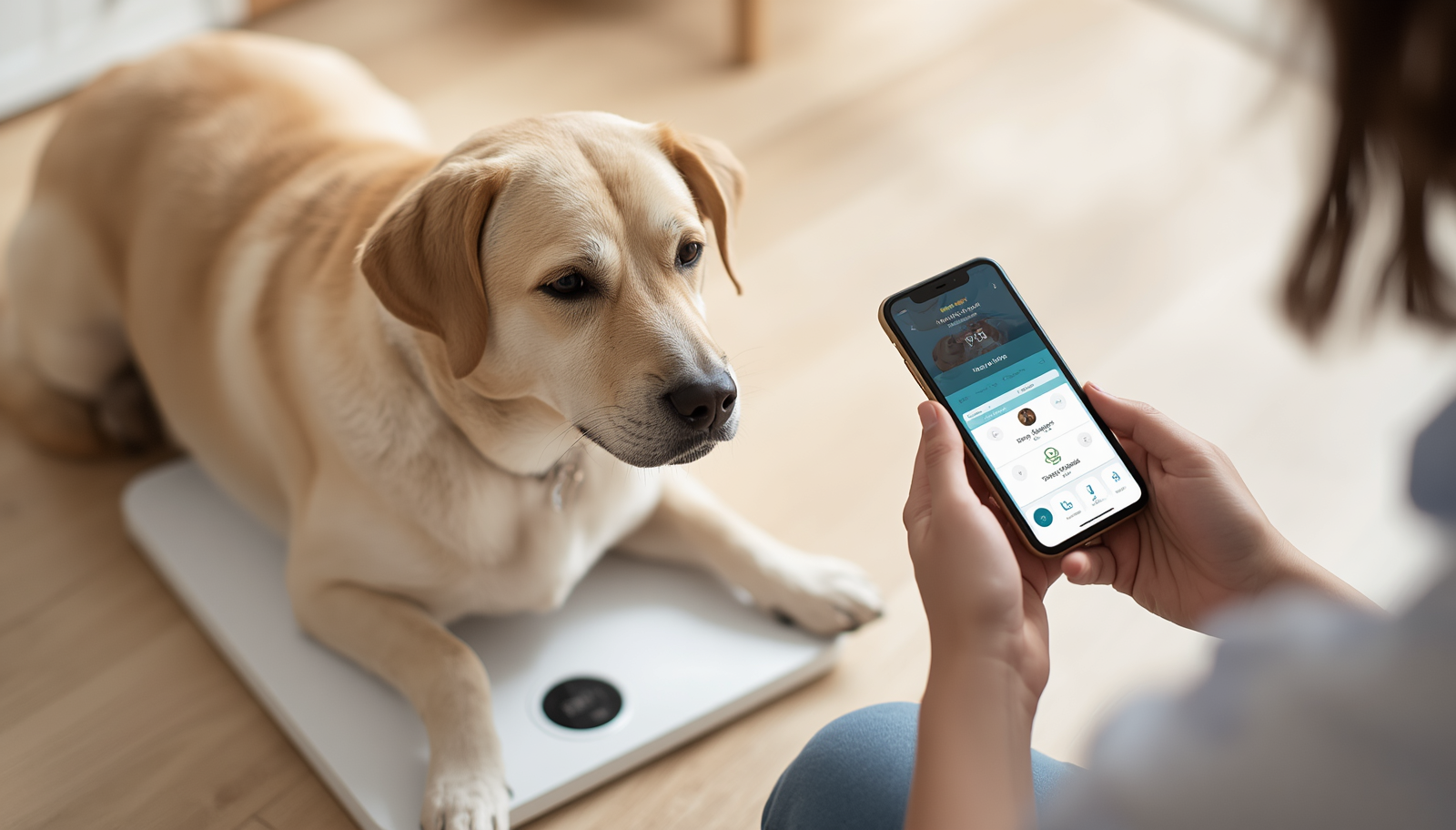
Ideal dog weight: how to know if your dog is at a healthy weight
Knowing whether your dog is at an ideal weight is not always as simple as looking at a number on the scale.
Sometimes a dog weighs “the right amount” according to a chart, but has lost muscle mass. Other times, they weigh a little more than expected, but are strong, active and in good body condition.
That is why, when we talk about ideal dog weight, we should not think only about kilos.
Weight matters, yes. But you also need to look at body shape, energy, age, breed, size and progress over time.
Quick idea: Your dog’s ideal weight is not just a number. It is the combination of weight, body shape, health and progress.
In Peludio, you can save your dog’s weight, review progress and see more clearly whether they are gaining, losing or staying stable.
You can also use Peludio’s ideal dog weight calculator and the pet growth and weight tracker to see changes with more perspective.
Quick summary
- Ideal weight does not depend only on breed or size.
- Two dogs of the same breed can have different healthy weights.
- Body condition is just as important as the number on the scale.
- Gently feeling the ribs can give you a useful clue.
- Sudden weight changes should always be discussed with a vet.
- Tracking weight helps you notice problems earlier.
Why ideal weight is not the same for every dog
Many people look for a chart to know how much their dog should weigh.
And yes, charts can guide you.
But they do not always tell the whole story.
A dog can be taller, shorter, more muscular, more active or have a different body structure from another dog of the same breed.
That is why ideal weight depends on several factors:
- Size.
- Age.
- Breed or breed mix.
- Activity level.
- Health status.
- Type of food.
- Neutering or spaying.
- Muscle mass.
- Life stage.
Assessing the weight of a puppy is not the same as assessing an adult or senior dog.
A dog that runs every day is also different from a dog with a quieter routine.
So instead of obsessing over one exact number, it is better to look at progress.
For a more practical guide, you can also read how to tell if your dog is at an ideal weight.
How to know if your dog is at an ideal weight
There is a simple way to start assessing your dog’s weight at home: observe and touch.
It does not need to be complicated. You just need to look at your dog’s body calmly.
Look at your dog from above
Look at your dog from above while they are standing.
You should usually be able to see a slight waist behind the ribs.
If the body looks completely straight or round, it may be a sign of some excess weight.
If, on the other hand, the bones are too visible or the dog looks very thin, it is also worth checking.
Look at your dog from the side
From the side, many dogs at a healthy weight have a slight upward tuck towards the abdomen.
Not all dogs look the same, because breed and body structure matter, but this can give you a first clue.
Gently feel the ribs
This is very useful.
You should be able to feel the ribs when you pass your hand gently over them, without pressing too hard.
If you cannot feel them at all, there may be excess fat.
If they feel too prominent or are clearly visible, your dog may be underweight.
Practical tip: Do not rely only on sight. Fur, breed and posture can be misleading. Combine observation, touch and weight tracking.
Signs your dog may be overweight
Overweight in dogs does not always appear suddenly. It often happens little by little.
One extra kilo may seem small, but in small dogs it can be significant.
Some signs that may make you suspect excess weight are:
- Moving becomes harder.
- Your dog gets tired faster during walks.
- The waist is less visible.
- You cannot feel the ribs easily.
- Breathing is harder during activity.
- Your dog is less interested in playing.
- Stairs or jumping become more difficult.
- Your dog has gained weight quickly.
This does not mean you should put your dog on a diet by yourself.
It is best to review the situation with your vet, especially if the change has been fast or there are other symptoms.
Signs your dog may be underweight
The opposite can also happen: your dog may be too thin or may have lost weight without you noticing.
Some signs to watch for are:
- Ribs are very visible.
- Spine or hips are too noticeable.
- Weight loss without a food change.
- Eating less than usual.
- Low energy or tiredness.
- Vomiting or diarrhoea.
- Loss of muscle mass.
- Coat looks duller.
Sudden weight loss should not be ignored.
It may be related to food, age, stress, digestive problems, illness or other factors that should be assessed by a professional.
Why tracking weight matters
Weighing your dog once is useful.
But the real value is in seeing progress over time.
It is not the same to know your dog weighs 10 kilos today as knowing they weighed 11 kilos three months ago and 12 kilos six months ago.
The trend tells a story.
And that story can help you notice changes earlier.
With good tracking, you can see:
- Whether weight stays stable.
- Whether there are gradual increases.
- Whether there are sudden drops.
- Whether weight changes after a new food.
- Whether weight changes after an illness.
- Whether weight changes with age.
- Whether a veterinary recommendation is working.
Sometimes, when you see your dog every day, you do not notice changes. But when you look at the data, everything becomes clearer.
To follow this more visually, you can use Peludio’s pet growth and weight tracker.