
When does a dog stop being a puppy? Guide by size and stage
Learn how to identify when your dog stops being a puppy, how size influences development and which signs show they are entering adulthood.
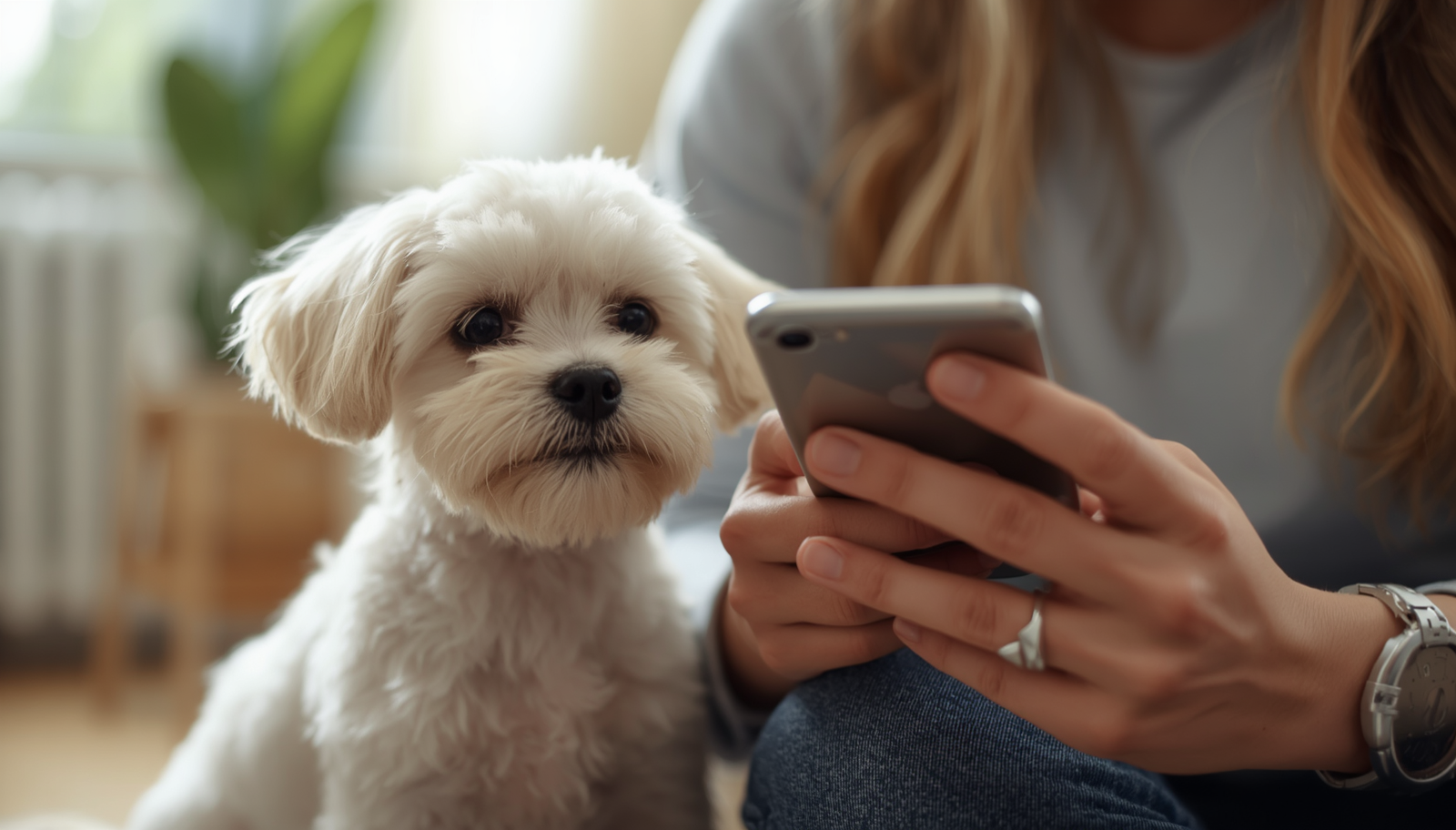
One day your dog fits in your arms.
Soon after, they are running around the house. Chewing toys. Learning commands. Changing teeth. Growing suddenly. And before you know it, you start wondering:
When does a dog stop being a puppy?
The answer depends on several factors.
Not all dogs mature at the same pace. A small dog may reach adult size earlier. A large dog may take much longer to finish growing.
Quick idea: A dog usually stops being a puppy between 9 and 24 months, depending mainly on size, breed, physical development and maturity.
But there is no exact date for every dog.
That is why it is more useful to observe growth, weight, behaviour and development stage.
With Peludio, you can save weight, photos, check-ups and notes to follow your dog’s progress from puppy to adult more clearly.
*
Quick summary
🐾 Small dogs usually mature earlier.
🐾 Large and giant dogs take longer to develop.
🐾 Stopping being a puppy does not mean becoming mature overnight.
🐾 Dog adolescence can be an intermediate stage.
🐾 Weight and body progress help you understand the transition.
🐾 Your vet can guide you depending on size, breed and health.
*
Not all dogs stop being puppies at the same age
It is normal to want an exact answer.
But in dogs, adulthood does not arrive at the same time for everyone.
Size matters a lot.
A small dog may complete most of their physical growth before one year old.
A large or giant dog, on the other hand, may continue developing for many more months.
That is why, when talking about when a dog stops being a puppy, it is useful to look at:
🐾 Size.
🐾 Breed or breed mix.
🐾 Weight.
🐾 Physical development.
🐾 Tooth change.
🐾 Energy level.
🐾 Behaviour.
🐾 Veterinary guidance.
Age is a reference, but it is not the only thing that matters.
*
Small dogs: they usually mature earlier
Small dogs usually reach adult size earlier than large dogs.
In many cases, around the first year they have completed much of their growth.
But this does not mean they behave like perfect adults.
A small dog may have finished growing physically and still show puppy-like behaviour.
For example:
🐾 Lots of energy.
🐾 Desire to play.
🐾 Difficulty focusing.
🐾 Need to chew.
🐾 Excitement around stimuli.
🐾 Learning still in progress.
So, even if they look physically adult, they may still need education, patience and routine.
*
Medium dogs: a more gradual transition
Medium dogs often have a more gradual transition.
They may begin to look adult before they are fully mature.
Sometimes they already have an adult body, but mentally they are still in a young stage.
In medium dogs, it is useful to observe:
🐾 Whether growth has slowed down.
🐾 Whether weight is starting to stabilise.
🐾 Whether energy level changes.
🐾 Whether routines are easier to follow.
🐾 Whether they show more self-control.
🐾 Whether adolescent behaviours are still present.
This stage can be beautiful, but also a little intense.
The dog is no longer tiny, but is still learning how to deal with the world.
*
Large dogs: they take longer to develop
Large dogs usually take longer to stop being puppies.
Their bodies need more time to finish growing and developing.
Even if they look huge at only a few months old, that does not mean they are adults.
In fact, many large dogs have an adult-looking body before they have real maturity.
In large dogs, it is useful to monitor:
🐾 Gradual growth.
🐾 Weight.
🐾 Joints.
🐾 Food.
🐾 Appropriate exercise.
🐾 Veterinary check-ups.
🐾 Behaviour changes.
Fast growth should be supported carefully.
That is why it is important to follow your vet’s guidance, especially around food, activity and weight.
*
Giant dogs: puppy stage may last longer
Giant dogs can take even longer to complete their development.
In some cases, the transition to adulthood may last until close to two years old.
This does not mean they are “babies” the whole time, but their bodies are still evolving.
In giant dogs, it is especially important to watch:
🐾 Weight.
🐾 Growth.
🐾 Joints.
🐾 Physical activity.
🐾 Adapted food.
🐾 Check-ups.
🐾 Rest.
🐾 Muscle development.
Patience is key.
A giant dog may look adult because of size, but still be young in development.
*
Signs your dog is stopping being a puppy
Beyond age, there are signs that may show your dog is moving into a more adult stage.
Some are physical.
Others are related to behaviour.
You may observe:
🐾 Growth slows down.
🐾 Weight begins to stabilise.
🐾 Body shape changes.
🐾 Tooth change is complete.
🐾 Coordination improves.
🐾 Focus becomes easier.
🐾 Impulse control improves.
🐾 Routines are better tolerated.
🐾 Tiredness changes.
Not all signs appear at the same time.
And not all dogs mature at the same rhythm.
*
Dog adolescence: a stage many people forget
Between puppy and adult, there can be a tricky stage: dog adolescence.
At this stage, the dog is no longer a tiny puppy, but they do not yet behave like a calm adult.
It may seem like they have “forgotten” things they already knew.
They may be more impulsive, more curious or more reactive to certain stimuli.
During this stage, you may notice:
🐾 More energy.
🐾 More independence.
🐾 Less attention.
🐾 Testing limits.
🐾 More interest in the environment.
🐾 Hormonal changes.
🐾 Need to reinforce training.
It does not mean you are doing something wrong.
It means your dog is growing.
Consistency, patience and routines are very important.
*
Food: when to switch from puppy to adult food
One of the most common questions is when to switch from puppy food to adult food.
The answer depends on size, breed, growth and veterinary guidance.
It is not ideal to switch only because the dog “looks older”.
The change should happen when the dog is really ready.
Before changing food, it is useful to review:
🐾 Age.
🐾 Size.
🐾 Weight.
🐾 Growth rhythm.
🐾 Body condition.
🐾 Activity level.
🐾 Vet recommendation.
Changing too early or too late may not be ideal for their stage.
So if you have doubts, speak with your vet.
*
Weight and growth: very useful data
Weight is a very useful tool for understanding whether your dog is moving from puppy to adult.
It is not only about how much they weigh today.
The important thing is how that weight has evolved.
You can save:
🐾 Weekly or monthly weight.
🐾 Progress photos.
🐾 Approximate height.
🐾 Body changes.
🐾 Appetite changes.
🐾 Veterinary check-up.
🐾 Activity notes.
When weight begins to stabilise and the body stops changing so quickly, it may be a sign that the dog is getting closer to adulthood.
*
How Peludio helps
Peludio can help you follow your dog’s progress from puppy to adult.
You can save weight, photos, vaccines, check-ups, notes and reminders.
This is useful because growth is not understood only through one date.
It is understood through data.
With Peludio, you can organise:
🐾 Age.
🐾 Weight.
🐾 Progress photos.
🐾 Vaccines.
🐾 Deworming.
🐾 Check-ups.
🐾 Food changes.
🐾 Behaviour notes.
🐾 Reminders.
This helps you see how your dog is growing and detect important changes more easily.
*
Quick checklist: is my dog stopping being a puppy?
You can use this list as a guide:
🐾 Growth has slowed down.
🐾 Weight is starting to stabilise.
🐾 Teeth have changed.
🐾 Coordination has improved.
🐾 Routines are better tolerated.
🐾 Focus lasts longer.
🐾 Body looks more adult.
🐾 The vet confirms development is going well.
🐾 Food is being reviewed according to life stage.
🐾 Weight, vaccines and check-ups are still being tracked.
Mini tip: Do not look only at age. Look at size, weight, body shape, behaviour and overall progress too.
*
Conclusion
Knowing when a dog stops being a puppy does not always depend on one exact date.
It depends on size, breed, growth, behaviour and health.
Small dogs usually mature earlier. Large and giant dogs usually need more time. And in between, a very normal adolescent stage can appear.
The most important things to observe are:
🐾 Growth.
🐾 Weight.
🐾 Behaviour.
🐾 Food.
🐾 Routines.
🐾 Veterinary check-ups.
🐾 Physical changes.
🐾 Energy changes.
Your dog does not stop being a puppy overnight.
They grow little by little.
And the better you follow their progress, the better you can support them at every stage.
*
Frequently asked questions
It depends on size and breed. As a general guide, many dogs stop being puppies between 9 and 24 months, although some mature earlier and others later.
Yes. Small dogs usually complete physical growth earlier than large or giant dogs. However, they may still show young behaviours.
Yes. Large dogs may look adult because of their size, but still be developing physically and emotionally for longer.
It depends on size, growth and veterinary guidance. It is not ideal to switch only because the dog looks older. Ask your vet.
It is a stage between puppyhood and adulthood when the dog may show more independence, energy, impulsiveness or difficulty focusing. It is a normal part of development.
Yes. Peludio lets you save weight, photos, vaccines, check-ups, notes and reminders to follow your dog’s progress from puppy to adult.
Keep your pet's story in one place
Photos, weight, vaccines and reminders in a living timeline, start free, no card required.
Create my pet's story