
How to tell if your dog is at an ideal weight at home
Learn how to tell if your dog is at an ideal weight by looking at body shape, feeling the ribs and tracking progress over time.
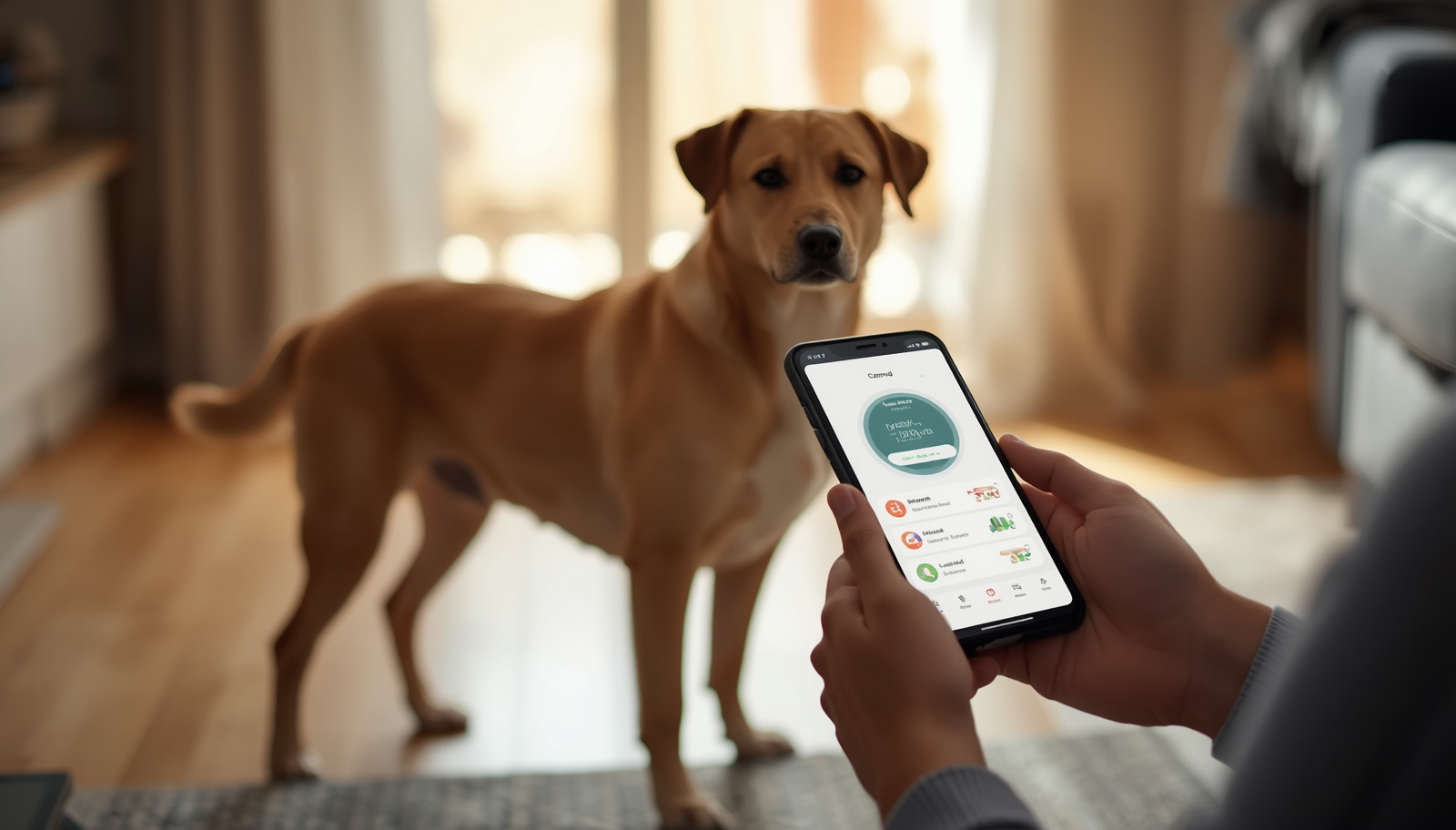
Sometimes you look at your dog and wonder:
Is my dog at an ideal weight, or are they gaining a little too much?
It is a very normal question.
Because it is not always easy to tell just by looking. Some dogs have a lot of fur, some are very muscular, some are small and show tiny changes quickly, and some are large enough for a few extra kilos to go unnoticed.
Also, because you see your dog every day, changes often happen so gradually that you barely notice them.
One day they look the same as always. Another day their waist seems less visible. Another day you wonder if they are getting tired faster.
And then the doubt appears.
Quick idea: To know if your dog is at an ideal weight, the scale is not enough. You also need to look at body shape, gently feel the ribs and review progress over time.
Ideal weight is not one exact number that works for every dog. It is a combination of weight, body shape, energy, age, size and health.
With Peludio, you can save your dog’s weight, add photos and track progress so changes become easier to see.
*
Quick summary
🐾 Not every dog has the same ideal weight.
🐾 The scale helps, but it does not tell the whole story.
🐾 Waist, ribs and energy give many useful clues.
🐾 A dog can weigh “normally” and still not have a healthy body condition.
🐾 Sudden weight changes should be discussed with a vet.
🐾 Saving photos and weight records helps you see real progress.
*
Why ideal weight is not just a number
Many people look for one exact figure.
They want to know if their dog should weigh 5 kilos, 10 kilos, 20 kilos or more.
And while having a reference can help, ideal weight does not work the same for every dog.
Two dogs of the same breed can have very different bodies. One may be taller, another more compact, one more muscular and another naturally lighter.
Other factors also matter:
🐾 Age.
🐾 Size.
🐾 Breed or breed mix.
🐾 Activity level.
🐾 Muscle mass.
🐾 Food.
🐾 Neutering or spaying.
🐾 Health status.
🐾 Life stage.
That is why ideal weight should be assessed together with body condition.
It is not only about how much your dog weighs.
It is about how your dog’s body looks and feels.
*
Look at your dog from above
A simple way to start is to look at your dog from above while they are standing.
Check whether you can see a slight waist behind the ribs.
It does not need to be dramatic, but there should usually be some shape.
If the body looks completely straight or rounded, it may be a sign of extra weight.
If the bones are too visible or the waist looks too sharp, your dog may be underweight.
This observation is not a diagnosis, but it gives you a first clue.
Practical tip: Do this calmly and without obsessing. The goal is not to judge your dog, but to understand how they are doing.
*
Look at your dog from the side
Next, observe your dog from the side.
Many dogs with a healthy body condition have a slight upward tuck toward the abdomen.
This means the chest area may look a little lower and the belly a little more tucked up.
But be careful: not all dogs have the same shape.
Some breeds are more compact, some dogs have a lot of fur and some have different body structures.
That is why this observation should be combined with other signs.
You can look at:
🐾 Whether the abdomen looks very rounded.
🐾 Whether the belly hangs more than usual.
🐾 Whether the silhouette has changed over time.
🐾 Whether the ribs are too visible.
🐾 Whether your dog seems heavier when moving.
Looking at the body from different angles gives you a more complete picture.
*
Gently feel the ribs
Touch is one of the most useful ways to assess whether your dog is at an ideal weight.
Pass your hand gently over the rib area.
The goal is to be able to feel the ribs without pressing too hard.
If you have to press firmly to find them, there may be excess fat.
If the ribs are clearly visible or feel too prominent, your dog may be underweight.
The ideal point is usually somewhere in the middle.
You should be able to feel the ribs, but they should not stick out too much.
Mini tip: Fur can be very misleading. In dogs with a lot of fur, touch is often more useful than sight.
*
Watch energy and movement
Weight can also show up in the way your dog moves.
An overweight dog may get tired sooner, move with more difficulty or be less interested in playing.
This does not always happen, but it is worth watching.
You can notice whether your dog:
🐾 Gets tired faster during walks.
🐾 Struggles to climb stairs.
🐾 Avoids jumping onto the sofa or into the car.
🐾 Plays less than before.
🐾 Breathes harder during activity.
🐾 Lies down sooner than usual.
🐾 Seems heavier or slower.
The opposite can also happen.
A dog that is losing weight or muscle may look weaker, less energetic or less interested in daily routines.
That is why energy is also part of weight tracking. ## Compare photos from different moments
A photo can help a lot.
When you see your dog every day, changes can go unnoticed. But if you compare a photo from three months ago with one from today, you may notice differences you had missed.
You can take photos from several angles:
🐾 From above.
🐾 From the side.
🐾 From the front.
🐾 While standing.
🐾 In similar moments.
You do not need a perfect photo session.
The important thing is that photos help you compare.
Saving photos together with weight records gives you a much clearer view of progress.
*
When to ask your vet for guidance
Some weight changes should always be reviewed by a professional.
You do not need to panic over every small variation, but it is worth paying attention if the change is sudden or comes with other symptoms.
It is a good idea to speak with your vet if you notice:
🐾 Fast weight gain.
🐾 Unexplained weight loss.
🐾 Poor appetite.
🐾 Excessive tiredness.
🐾 Vomiting.
🐾 Diarrhoea.
🐾 Drinking much more than usual.
🐾 Behaviour changes.
🐾 Difficulty moving.
🐾 Pain or discomfort.
Weight can change for many reasons: food, activity, age, illness, stress or medication.
So if you have doubts, veterinary guidance is the safest option.
*
What information is worth saving
To know whether your dog is at an ideal weight, it is better not to rely only on memory.
You can save simple but useful information.
🐾 Current weight.
🐾 Weight date.
🐾 Progress photos.
🐾 Type of food.
🐾 Approximate food amount.
🐾 Activity level.
🐾 Recent routine changes.
🐾 Vet comments.
🐾 Symptoms or changes noticed.
🐾 Next check-up.
For example, it is not the same to write:
“My dog weighs 12 kilos.”
As it is to write:
“My dog weighs 12 kilos, has gained 700 grams in two months, gets tired faster on walks and is eating as usual.”
The second note helps you understand what is happening much better.
*
How Peludio helps
Peludio can help you track your dog’s weight and body condition more clearly.
You can save weights, photos, notes, check-ups, vaccines, deworming and reminders.
This is useful if:
🐾 You want to check whether your dog is at an ideal weight.
🐾 Your dog is growing.
🐾 Your dog is senior.
🐾 You changed their food.
🐾 Your dog has gained or lost weight.
🐾 You are following veterinary advice.
🐾 Several people care for your dog.
With Peludio, weight stops being a random number and becomes part of your dog’s health history.
*
Quick checklist to know if your dog is at an ideal weight
You can use this list as a simple guide:
🐾 Can I feel the ribs without pressing too hard?
🐾 Can I see a slight waist from above?
🐾 Does the abdomen look balanced from the side?
🐾 Does my dog have the same energy as usual?
🐾 Does my dog get tired faster during walks?
🐾 Has my dog gained or lost weight recently?
🐾 Do I have photos to compare progress?
🐾 Do I know how much my dog weighed a few months ago?
🐾 Is my dog eating as usual?
🐾 Have I asked my vet if I have doubts?
Mini tip: If you are not sure whether your dog is at an ideal weight, do not rely only on a chart. Observe, gently feel the ribs, compare photos and review progress.
*
Conclusion
Knowing whether your dog is at an ideal weight does not depend only on the scale.
Weight matters, but waist, ribs, energy, movement and changes over time matter too.
The most useful thing is to:
🐾 Observe your dog’s body.
🐾 Gently feel the ribs.
🐾 Record weight.
🐾 Compare photos.
🐾 Save important notes.
🐾 Speak with your vet if something changes.
Your dog does not need you to obsess over every gram.
But they do need you to pay attention to their progress.
And the better organised their information is, the easier it becomes to care for them well.
*
Frequently asked questions
You can check whether your dog has a slight waist from above, look at the body from the side and gently feel the ribs. You should be able to feel them without pressing too hard, but they should not be extremely visible.
Some signs may include loss of waist, difficulty feeling the ribs, tiredness during walks, less desire to play or more difficulty moving.
Your dog may be too thin if the ribs, spine or hips are very visible, if there is unexplained weight loss or if they seem lower in energy than usual.
Not always. Charts can guide you, but they do not consider body structure, muscle mass, age, activity level or health status.
For a healthy adult dog, a monthly check can be useful. Puppies, senior dogs or dogs under veterinary guidance may need more frequent tracking.
No. Peludio helps you organise weight, photos, notes and reminders, but any medical concern should always be discussed with a vet.
*
Keep your pet's story in one place
Photos, weight, vaccines and reminders in a living timeline, start free, no card required.
Create my pet's story