
How often to deworm a dog: guide by age and lifestyle
Learn how often to deworm your dog, the difference between internal and external parasite control, and how to track it easily.
One of the most common questions when you live with a dog is this:
How often should I deworm my dog?
And it is completely normal to ask.
Deworming is not always something you can see. With vaccines, you usually have a clear date. With weight, you can check the scale. But with parasites, there may not be an obvious sign until a problem appears.
That is why deworming is one of those care tasks that can easily be forgotten.
One day you think: “I’ll write it down later.” Another day you wonder: “Was it due this month?” And suddenly, you are not sure when the last dose was.
Quick idea: How often you should deworm a dog depends on age, environment, lifestyle and veterinary advice.
Not every dog needs the exact same plan. A puppy does not have the same needs as an adult dog. And a dog that goes to the countryside has a different risk level than a dog with a calmer city routine.
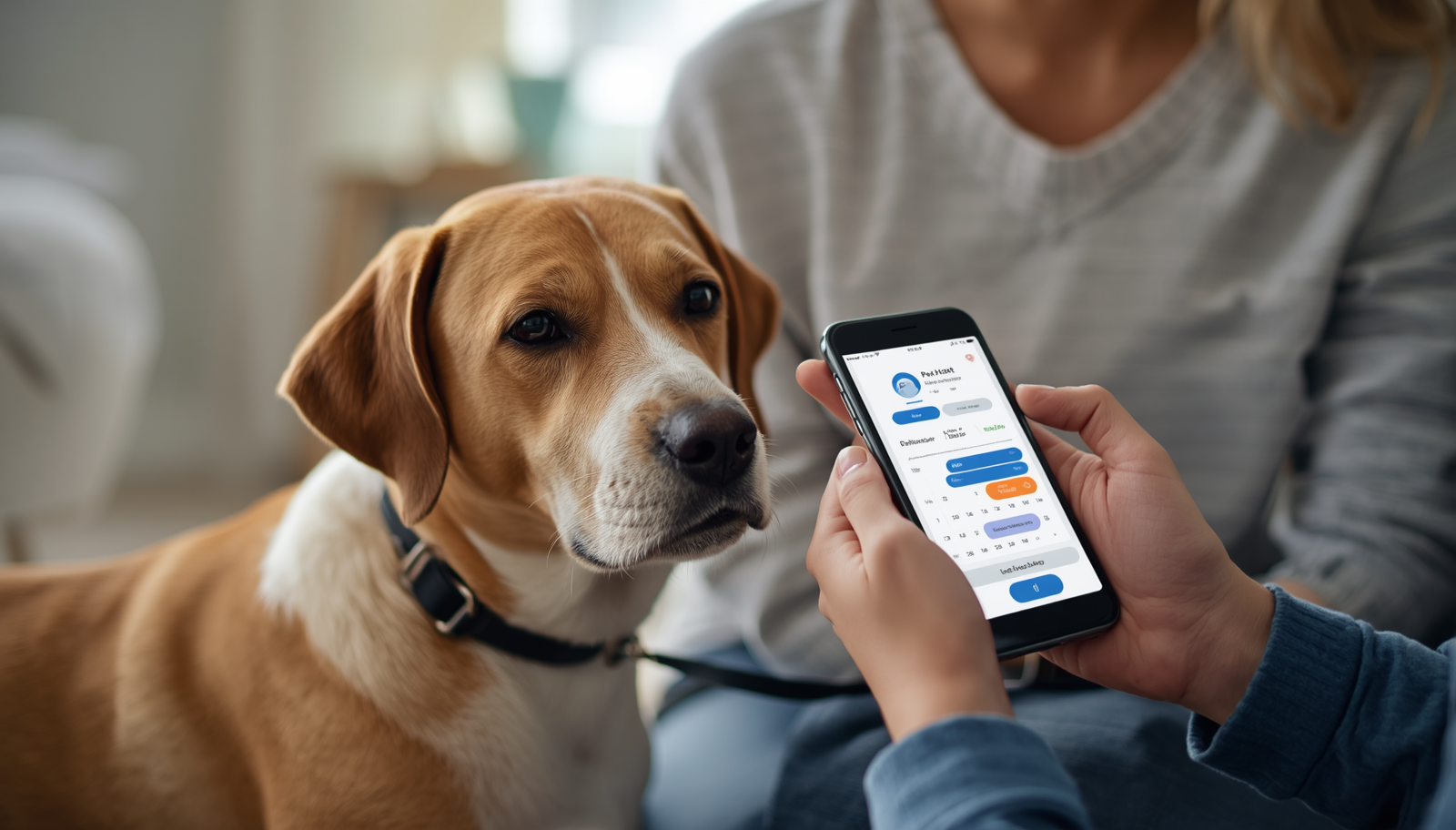
With Peludio, you can save deworming dates, add reminders and know when the next one is due.
*
Quick summary
🐾 Deworming should be organised with veterinary guidance.
🐾 Not all dogs have the same risk.
🐾 Internal and external parasite control are not the same.
🐾 Puppies often need closer tracking.
🐾 Lifestyle has a big influence.
🐾 Saving dates and reminders helps avoid missed doses.
*
What does deworming a dog mean?
Deworming a dog means helping protect them from parasites that may affect their health.
Some parasites live inside the body, such as certain intestinal parasites. Others affect dogs from the outside, such as fleas, ticks and other external parasites.
So when we talk about deworming, we are not talking about only one thing.
We are talking about different types of prevention and treatment that can change depending on the dog.
The right plan may depend on:
🐾 Your dog’s age.
🐾 Weight.
🐾 Health status.
🐾 Area where they live.
🐾 Whether they go to parks or natural areas.
🐾 Whether they live with other animals.
🐾 Whether there are young children at home.
🐾 Whether they travel.
🐾 Whether they have had parasites before.
🐾 Veterinary advice.
That is why online information can guide you, but the real plan should always be set by a professional.
*
Internal and external deworming are not the same
One of the most common mistakes is thinking that “deworming” always means the same thing.
It does not.
There are two main types of parasite control that are useful to understand.
Internal deworming
Internal deworming is related to parasites that can live inside the dog’s body, especially in the digestive system.
Your vet may recommend a plan based on age, weight, environment and risk.
It is especially important in puppies, dogs that have been in contact with other animals, dogs that spend a lot of time in natural areas or dogs with digestive symptoms.
External parasite control
External parasite control is related to parasites that affect the dog from the outside.
This usually includes fleas, ticks and other parasites that can be found in the environment.
The right plan can depend a lot on where you live, the season, the climate and your dog’s habits.
A dog that walks through grass, countryside or mountain areas may have a different exposure level from a dog that mostly walks on city streets.
*
How often to deworm a puppy
Puppies usually need closer tracking.
Their immune system is still developing and, during the first months, many things happen at the same time: vaccines, check-ups, food changes, growth and adapting to a new home.
That is why puppy deworming should be carefully coordinated with a vet.
The professional can review:
🐾 Puppy’s age.
🐾 Current weight.
🐾 General health.
🐾 Whether the puppy has already been dewormed.
🐾 Whether there are digestive symptoms.
🐾 Whether the puppy lives with other animals.
🐾 Upcoming vaccines.
🐾 Environmental risk.
You should not improvise with products or dates.
With puppies, it is especially important to use products that are suitable for their age and weight, always indicated by the vet.
*
How often to deworm an adult dog
For adult dogs, frequency can vary a lot.
A healthy adult dog with a stable routine and low risk may have a different plan from a dog that often goes to the countryside, attends dog daycare, travels or lives with other animals.
So instead of looking for one universal frequency, it is better to review the individual case.
Several things can influence the plan:
🐾 Whether your dog goes to natural areas.
🐾 Whether your dog swims in rivers or wet areas.
🐾 Whether your dog has contact with many other dogs.
🐾 Whether your dog lives with cats or other animals.
🐾 Whether there are young children at home.
🐾 Whether your dog has had fleas, ticks or parasites before.
🐾 Whether your dog travels to other areas.
🐾 Whether your dog has previous health conditions.
The key is to have a clear plan and not lose track of dates.
*
How often to deworm a senior dog
Senior dogs also deserve special attention.
With age, there may be changes in health, mobility, food needs or immune response.
This does not mean that every older dog needs more products or a higher frequency. It means the plan should be reviewed with the vet and adapted to the dog’s current situation.
For senior dogs, it can be useful to keep track of:
🐾 Weight.
🐾 Medication.
🐾 Previous illnesses.
🐾 Digestive health.
🐾 Activity level.
🐾 Contact with other animals.
🐾 Appetite changes.
🐾 Reactions to previous products.
The more organised the information is, the easier it becomes to adapt care.
*
Signs that may suggest a parasite problem
Sometimes parasites are not visible.
But there are signs that may suggest something is not right.
Some signs to watch include:
🐾 Frequent itching.
🐾 Intense scratching.
🐾 Excessive licking.
🐾 Fleas or ticks.
🐾 Vomiting.
🐾 Diarrhoea.
🐾 Weight loss.
🐾 Swollen belly.
🐾 Dull coat.
🐾 Tiredness.
🐾 Appetite changes.
These signs do not always mean parasites are the cause, because they can be related to other issues.
But if they appear or repeat, it is best to speak with your vet.
*
Why tracking deworming matters
Deworming is one of those tasks that is easy to forget.
Not because it is not important, but because there is not always a clear warning sign.
If you do not have a date saved, it is easy to wonder:
“Did I deworm my dog last month?” “Was it due now or next month?” “Was it internal or external?” “What product did the vet recommend?”
That is why tracking helps so much.
You can save:
🐾 Date of the last deworming.
🐾 Type of parasite control.
🐾 Product used.
🐾 Dog’s weight at the time.
🐾 Next recommended date.
🐾 Vet comments.
🐾 Reactions or effects observed.
🐾 Photo of the product or document.
This helps avoid confusion and makes it easier to follow a clear plan.
*
How Peludio helps
Peludio can help you keep your dog’s deworming routine much more organised.
You can save dates, add notes, create reminders and keep information related to vaccines, weight, check-ups and important care in one place.
This is especially useful if:
🐾 You have a puppy.
🐾 Your dog often goes to the countryside.
🐾 Your dog has had parasites before.
🐾 Your dog has several health routines.
🐾 Your dog lives with other animals.
🐾 Several people care for your dog.
🐾 You want to avoid missed dates.
With Peludio, deworming no longer depends on memory and becomes part of your dog’s health history.
*
Quick deworming checklist
You can use this list to check whether everything is under control:
🐾 Do I know when my dog was last dewormed?
🐾 Do I know if it was internal, external or both?
🐾 Do I have the product used written down?
🐾 Do I know when the next one is due?
🐾 Am I considering my dog’s current weight?
🐾 Does my dog need a special plan because of age?
🐾 Have I checked the frequency with my vet?
🐾 Do I have reminders saved?
🐾 Have I noticed any reaction?
🐾 Are vaccines and deworming dates both under control?
Mini tip: If you do not remember when your dog was last dewormed, do not improvise. Ask your vet and start saving the dates from now on.
*
Conclusion
Knowing how often to deworm a dog is important, but there is no single answer that works for every dog.
It depends on age, environment, lifestyle, health status and veterinary advice.
The most important thing is to:
🐾 Understand the difference between internal and external parasite control.
🐾 Follow a professional plan.
🐾 Save dates.
🐾 Use reminders.
🐾 Watch for changes.
🐾 Ask your vet if symptoms appear.
🐾 Avoid improvising products or doses.
Deworming is part of your dog’s everyday care, even if you cannot always see it.
And the better organised the information is, the easier it becomes to protect your dog and avoid missed dates.
*
Frequently asked questions
It depends on age, weight, environment, lifestyle and veterinary advice. Not all dogs need the same plan.
No. Internal deworming is related to parasites that may live inside the body. External parasite control focuses on parasites such as fleas, ticks and other environmental parasites.
Puppies usually need closer tracking, but the frequency should be set by a vet according to age, weight, health status and vaccination plan.
The best option is to speak with your vet before repeating or improvising a dose. The professional will tell you how to restart the plan safely.
Some signs may include itching, scratching, vomiting, diarrhoea, weight loss, swollen belly or dull coat. These symptoms can also have other causes, so it is best to check with a vet.
No. Peludio helps you organise dates, reminders and health information, but any medical plan should always be set by a vet.
*
![How often to deworm a dog: guide by age and lifestyle
Keep your pet's story in one place
Photos, weight, vaccines and reminders in a living timeline, start free, no card required.
Create my pet's story