
How to calculate dog age by size or breed
Learn how to calculate your dog’s age by size or breed and why small, medium and large dogs age at different speeds.
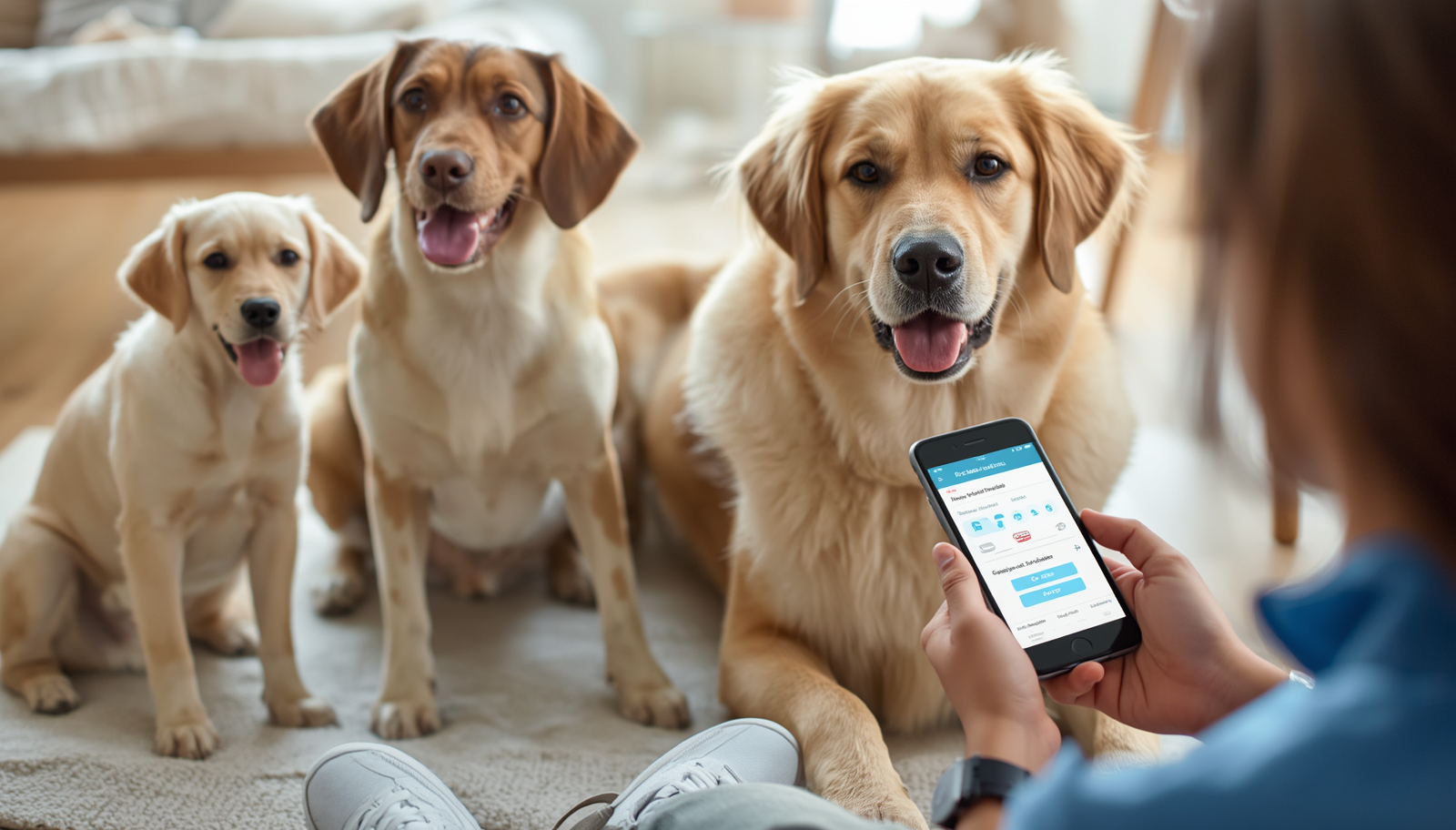
For years, we have heard that one dog year equals seven human years.
It is easy to remember, but it does not work the same way for every dog.
A small 8-year-old dog may still have plenty of energy. A large dog of the same age may already be entering a more mature stage and need closer tracking.
So if you want to calculate dog age by size, it is better not to rely only on the x7 rule.
Size, breed, genetics, weight, health and lifestyle all influence how a dog ages.
Quick idea: Small, medium, large and giant dogs do not age at the same pace. Calculating dog age by size is much more realistic than simply multiplying by 7.
With Peludio, you can save your dog’s age, weight, check-ups, vaccines and important changes to understand their life stage better.
*
Quick summary
🐾 The 7-year rule is too simple.
🐾 Dog size has a big influence on ageing.
🐾 Small dogs often reach the senior stage later.
🐾 Large and giant dogs often mature earlier.
🐾 Breed can guide you, but it does not explain everything.
🐾 The most useful approach is to combine age, size, health and tracking.
*
Why dogs do not all age the same way
Dogs do not all age at the same rhythm.
Even if two dogs are the same real age, they may be in very different life stages.
For example, a 9-year-old Maltese may still be active and playful. A giant dog of the same age may need more rest, more frequent check-ups and adapted care.
This happens because body size plays an important role in ageing.
Other factors also matter:
🐾 Genetics.
🐾 Breed.
🐾 Weight.
🐾 Food.
🐾 Daily activity.
🐾 Health status.
🐾 Veterinary check-ups.
🐾 Previous illnesses.
🐾 Quality of life.
That is why dog age should not be calculated using only one formula.
It is better to use an estimate adapted to size and observe how your dog is actually doing.
*
Age in small dogs
Small dogs often have a longer life expectancy than large dogs.
They also tend to reach the senior stage later.
This does not mean they do not age or that they do not need care. It simply means their rhythm may be different.
In small dogs, it is useful to observe:
🐾 Energy changes.
🐾 Weight gain or weight loss.
🐾 Dental problems.
🐾 Appetite changes.
🐾 Difficulty jumping or climbing stairs.
🐾 Sleep changes.
🐾 Pending check-ups.
A small dog may look young for a long time, but that does not mean tracking should be forgotten.
Sometimes, because they stay active, we forget they are also getting older.
*
Age in medium dogs
Medium dogs usually have an intermediate ageing pattern.
They do not often age as early as giant dogs, but they may not stay youthful for as long as some small dogs.
There can be a lot of variety in this group.
A very active medium dog, with a healthy weight and regular check-ups, may stay in great shape for years.
But if there is excess weight, low activity or health issues, age may become noticeable earlier.
In medium dogs, it is useful to track:
🐾 Weight and body condition.
🐾 Activity level.
🐾 Energy during walks.
🐾 Mobility changes.
🐾 Dental health.
🐾 Vaccines and deworming.
🐾 Veterinary check-ups.
Medium size does not mean everything is easier, but it often gives a balanced view of life stages.
*
Age in large dogs
Large dogs often mature and age earlier than small dogs.
This does not mean they suddenly become old, but it does mean you may need to pay attention to certain changes sooner.
A large dog may need closer tracking around mobility, weight, joints, rest and check-ups.
In large dogs, it is useful to observe:
🐾 Whether they get tired sooner.
🐾 Whether they find it harder to stand up.
🐾 Whether they avoid jumping.
🐾 Whether they gain weight.
🐾 Whether they lose muscle mass.
🐾 Whether they need more rest.
🐾 Whether their way of walking changes.
Large dogs usually carry more weight on their joints, so weight control and adapted activity can be very important.
*
Age in giant dogs
Giant dogs have a different life rhythm.
They often grow a lot, mature quickly and enter stages that need more care and tracking earlier.
This does not mean they cannot have an active and happy life. But it does mean changes should be observed sooner.
In giant dogs, it can be useful to track:
🐾 Weight.
🐾 Mobility.
🐾 Joints.
🐾 Tiredness.
🐾 Food.
🐾 Veterinary check-ups.
🐾 Behaviour changes.
🐾 Difficulty standing up or lying down.
In these cases, having a clear health history helps a lot, because any change is easier to explain when you have saved data.
*
Breed helps, but it is not everything
Breed can give you a useful reference, but it should not be the only one.
Two dogs of the same breed can age differently.
One may be more active, another may be overweight, one may have previous health problems and another may be in great shape.
There are also mixed-breed dogs where you may not know exactly which breeds are involved.
That is why it is better to look at the whole picture instead of focusing only on breed.
🐾 Size.
🐾 Weight.
🐾 Energy.
🐾 Health history.
🐾 Food.
🐾 Activity.
🐾 Check-ups.
🐾 Recent changes.
Breed can guide you, but daily tracking tells you much more.
*
How to calculate dog age more realistically
To calculate dog age more realistically, it is useful to consider several details.
Knowing how many years old your dog is will not always be enough.
It is useful to look at:
🐾 Real age.
🐾 Size.
🐾 Breed or breed mix.
🐾 Current weight.
🐾 Health status.
🐾 Activity level.
🐾 Life stage.
🐾 Recent changes.
A dog age calculator can help you get a more useful estimate than the x7 rule.
But remember: the final number is only a guide.
The real goal is to understand your dog’s life stage better.
*
What to save together with age
Age becomes much more useful when it is connected with other data.
For example, it is not the same to know:
“My dog is 10 years old.”
As it is to know:
“My dog is 10 years old, small-sized, keeps a healthy weight, has check-ups up to date and has been sleeping a little more lately.”
The second sentence tells you much more.
You can save information such as:
🐾 Real age.
🐾 Estimated age in human years.
🐾 Size.
🐾 Weight.
🐾 Progress photos.
🐾 Veterinary check-ups.
🐾 Vaccines.
🐾 Deworming.
🐾 Energy changes.
🐾 Mobility changes.
🐾 Important notes.
🐾 Upcoming appointments.
This information helps you understand how your dog is doing at each stage.
*
How Peludio helps
Peludio can help you understand your dog’s life stage more clearly.
You can save age, weight, photos, vaccines, check-ups, deworming, notes and reminders.
This is especially useful if:
🐾 Your dog is entering adulthood.
🐾 Your dog is becoming senior.
🐾 You have doubts about human-age estimates.
🐾 You want to track weight changes.
🐾 You want to save check-ups.
🐾 Several people care for your dog.
🐾 You want to keep the health history organised.
With Peludio, age stops being a random number and becomes part of a more complete health story.
*
Quick checklist to calculate your dog’s age better
You can use this list as a guide:
🐾 Do I know my dog’s real age?
🐾 Do I know if my dog is small, medium, large or giant?
🐾 Do I have current weight under control?
🐾 Have I noticed energy changes?
🐾 Do I know if my dog is entering adulthood or senior stage?
🐾 Are veterinary check-ups saved?
🐾 Do I have photos to compare progress?
🐾 Has mobility changed?
🐾 Are vaccines and deworming up to date?
🐾 Am I using a size-based calculator instead of only the x7 rule?
Mini tip: If you want to understand your dog’s age better, do not focus only on years. Look at size, body, energy and health history.
*
Conclusion
Calculating dog age by size or breed is much more realistic than multiplying by 7.
Small, medium, large and giant dogs do not age in the same way.
Breed can guide you, but it does not explain everything. Weight, health, activity and daily progress matter a lot too.
The most useful thing is to:
🐾 Use a size-based estimate.
🐾 Observe energy.
🐾 Review weight.
🐾 Save important changes.
🐾 Speak with your vet if something changes.
🐾 Keep the health history organised.
Your dog is not just an age.
They are a stage, an evolution and a complete story.
And the better you understand that story, the better you can support them.
Keep your pet's story in one place
Photos, weight, vaccines and reminders in a living timeline, start free, no card required.
Create my pet's story